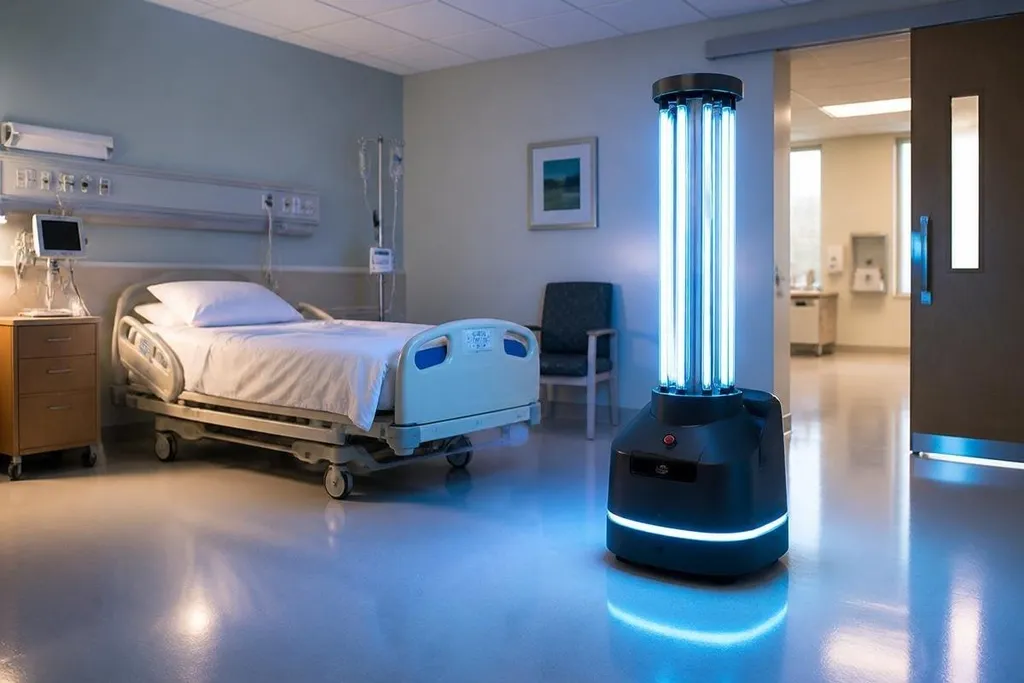
UV robots use ultraviolet light to lower the number of germs on exposed surfaces. They can work across rooms without spraying chemicals, but their results depend on light dose, distance, shadows, and safe operation.
- UV-C light damages the genetic material of exposed microorganisms.
- A blocked surface may receive little or no useful light.
- People must leave the area while the robot runs.
How the light works
Most germ-killing UV robots use short-wave ultraviolet light, often called UV-C. The light can damage the genetic material inside bacteria, viruses, and other microorganisms, which stops them from copying themselves.
That process depends on dose. A surface needs enough UV light for long enough to get the intended result. Distance matters because light spreads as it travels, and a robot may need more time to treat a surface farther away.
The robot does not wipe dirt away. Dust, grease, fabric, and other material can block the light from reaching a surface, so cleaning remains part of the job. UV light also treats exposed areas rather than the whole room at once.
Why shadows limit the result
A bed rail, chair, cart, or door handle can block the light behind it. The shaded area may receive little useful UV, even when the robot has run for the planned cycle.
That makes robot placement important. A unit may need several positions in one room, with each position aimed at the surfaces that need treatment. Some systems map the room or use sensors to avoid obstacles, but sensing an object does not mean the light reaches every side of it.
The room layout matters too. A crowded care room, hotel room, or lab can take more cycles than an open space. Robot speed matters less than whether the lamp reaches the surfaces that people touch.
Where UV robots fit
UV robots can add a treatment step after routine cleaning.
A hospital may use one in a vacant patient room, while a laboratory may use it after staff remove material from work surfaces. Other sites may use UV systems in rooms that need repeated treatment between occupants.
The robot’s value comes from repeatable movement and records of each cycle. A useful system should show where it went, when it ran, and whether the cycle stopped early. Those records help staff check that the robot completed the planned work.
UV robots bring automation into cleaning work, where route control and safe stops matter as much as lamp output. UV robotics reporting from Robot24.com can tie those claims to named machines and test results.
The limits are plain. UV does not replace hand cleaning, and it cannot treat a surface hidden behind another object. A robot also needs a clear room, charged batteries, maintenance, and staff who know when the cycle is safe to start.
Safety comes before the cycle
Direct exposure to germ-killing UV light can harm eyes and skin. A UV robot should stop or stay off when a person enters its operating area, using sensors, room controls, warning signs, or a site procedure that keeps people out.
The exact safety setup depends on the robot and the building. Staff need clear instructions for starting a cycle, ending one early, checking a fault, and confirming that nobody remains in the room. A flashing lamp is not a substitute for a tested safety process.
UV can also affect some plastics, rubber parts, fabrics, and coatings after repeated exposure. The site should check the robot maker’s material guidance before running many cycles near equipment or furnishings.
Before you buy or deploy
Use this checklist to test whether a UV robot fits the task:
- Map the room: list the surfaces people touch and mark the ones hidden from a lamp position.
- Check the proof: ask how the maker measures UV dose and how the system records each run.
- Test the safety stop: confirm that the lamps shut off when a person enters the area.
- Plan the cleaning step: remove dirt and arrange furniture before the UV cycle begins.
- Count the positions: see how many places the robot needs to cover one room.
- Set a service plan: include lamp output checks, battery care, sensor checks, and software updates.
I'd treat a UV robot as a controlled extra step, not as a replacement for cleaning staff. The purchase makes sense when the site can keep rooms empty, repeat the same process, and verify what the robot actually treated.
The open question for each site is practical: can the robot reach enough exposed surface, safely and repeatedly, to justify its time and upkeep?